
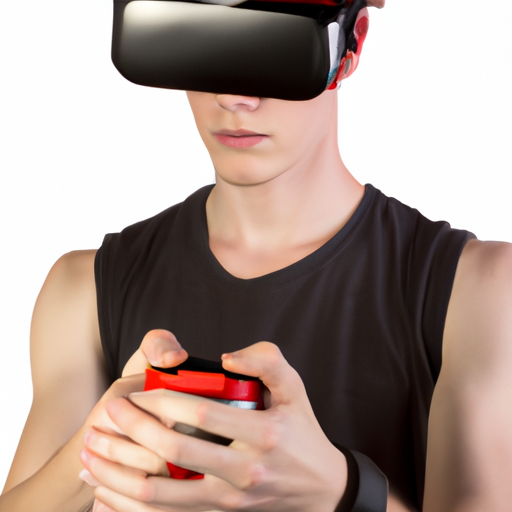
In today’s rapidly evolving business landscape, organizations are constantly seeking innovative ways to enhance training and development. One technology that’s making waves is Virtual Reality (VR). This cutting-edge approach to training offers immersive learning experiences that traditional methods simply can’t match.
What is Virtual Reality (VR) in Training?
Virtual Reality refers to computer-generated environments that simulate a real or imagined world, allowing users to interact within it. In a training context, VR provides a safe and controlled space to practice skills, experiment, and learn without the consequences often associated with real-life scenarios.
The Advantages of VR Training
- Immersive Learning: VR creates an engaging learning environment that captures learners’ attention and promotes better retention of information.
- Enhanced Skill Development: Trainees can practice complex procedures or scenarios repeatedly, improving proficiency and building confidence.
- Safe Environment: VR training allows learners to make mistakes and learn from them without any risk to themselves or others.
- Cost-Effective: By reducing the need for physical resources and minimizing time away from work, VR training can ultimately save organizations money.
- Customizable Experiences: Training programs can be tailored to meet specific organizational needs and can be updated easily to reflect changes in processes.
Industries Leveraging VR Training
Multiple sectors are already reaping the benefits of VR technology in training:
- Healthcare: Medical professionals use VR to practice surgeries and patient interactions, leading to improved outcomes.
- Manufacturing: Workers can train on machinery or processes in a virtual setting, reducing the risks associated with real-world training.
- Military and Emergency Services: VR simulations prepare personnel for high-stress scenarios without the real-world dangers.
- Corporate Training: Companies utilize VR for onboarding and continuing education, enhancing employee engagement and knowledge retention.
Challenges and Future of VR Training
Despite its advantages, there are challenges to implementing VR in training programs, such as the initial cost of hardware and the need for technical expertise. However, as technology advances and costs decrease, it is likely that we will see broader adoption across various industries.
In the future, VR training could become a standard in professional development, with advancements like haptic feedback and AI-enhanced simulations creating even more realistic experiences.
Conclusion
Virtual Reality is poised to revolutionize the way we approach training and education. By providing immersive, safe, and engaging learning experiences, VR technology not only enhances skill development but also fosters a culture of continuous learning and growth within organizations. As we look ahead, the potential applications of VR in training are limitless.
Are you considering integrating VR into your training programs? Share your thoughts in the comments below!