Why our DBA picks up the phone (and your hyperscaler doesn't)
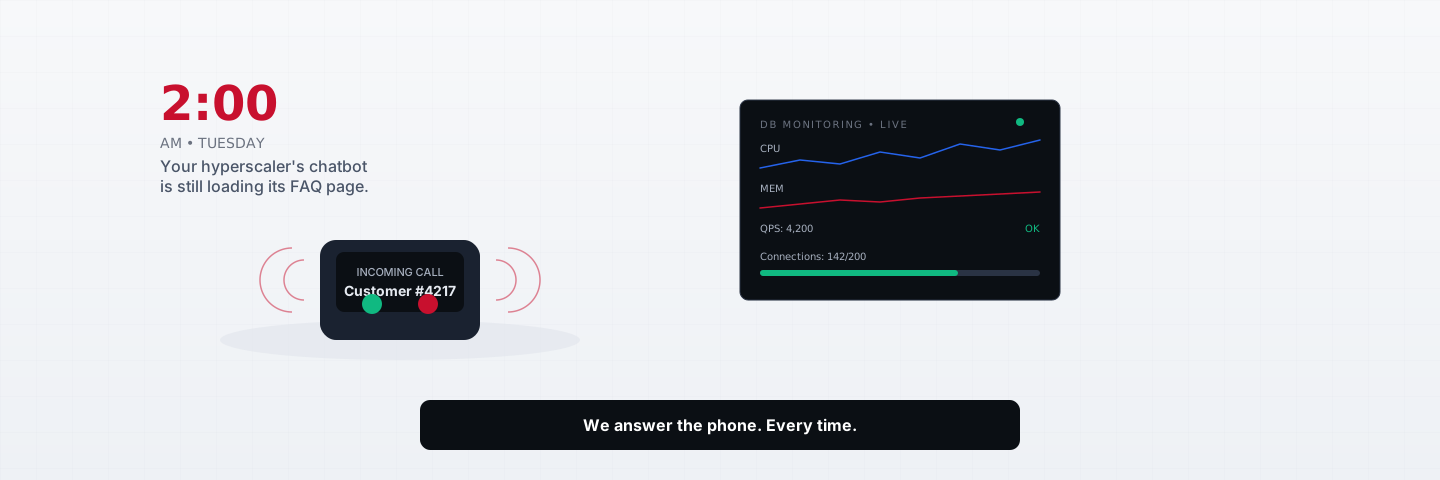
There's a specific kind of pain that growing companies hit somewhere between Series A and Series B. The product is working. The infrastructure is mostly working. And then at 2 a.m. on a random Tuesday, the database isn't working, and the company learns that "managed cloud" from a hyperscaler does not mean "someone will answer the phone."
We built RiteCloud because we kept watching that scenario play out, and because our own internal infrastructure team kept fielding the same panicked calls from operators we knew personally. So we did the obvious thing: we packaged what our team already does internally and made it available externally.
The product is mundane on purpose. Managed Postgres. Managed MySQL. Managed Mongo. Managed Redis. Managed VMs and containers on top-tier providers. Backups. Point-in-time recovery. Patching. Monitoring. The boring stuff. You don't pay us for novelty. You pay us for boredom — yours, while we handle the unboring stuff in the background.
The differentiator is on-call. When something breaks, you call a number, and a human picks up. That human is on the same team as the engineer who provisioned your database. They have the runbook. They have the credentials. They can fix it, not escalate it. That's the entire pitch.
A few things that follow from "we actually answer the phone":
- Our pricing is fixed per workload, not per request. We can budget our team's time. You can budget your bill.
- Our DR drills are real, run quarterly, and visible to you. We've seen too many "we have backups" sentences turn into "we had backups" sentences during an actual incident.
- Our migration assistance is included for every customer. Most of our incoming customers are leaving a hyperscaler or a self-managed setup. The migration is the hard part. We do it as part of onboarding.
The downside is that we don't scale infinitely the way a hyperscaler does. We work best for businesses processing somewhere between "real production traffic" and "we have a dedicated SRE team and don't need help." That's a wide band — most operators we know are inside it for years.
If your team is currently the on-call DBA, and you'd rather not be, that's the conversation we'd like to have.