What "operator-first" actually means when you're choosing software
The phrase "operator-first" gets used in a lot of pitch decks, including ours. It's worth defining what we actually mean by it before we build a whole company around it.
When we say a product is operator-first, we mean three things, and only three things.
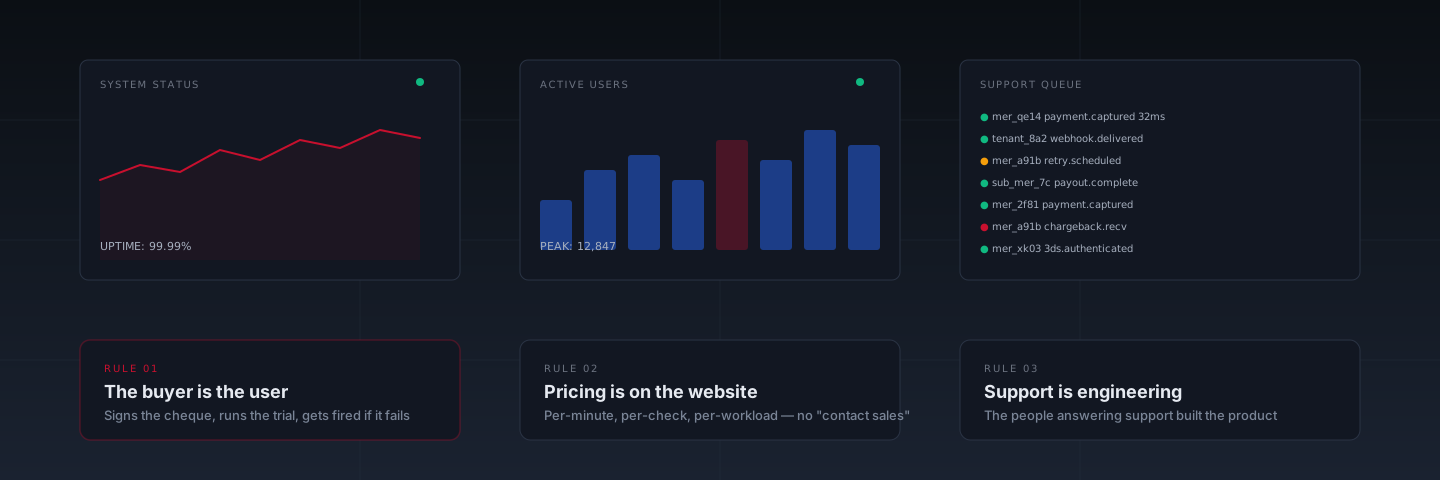
1. The buyer is the user. Operator-first software is bought by the person who has to use it on Monday morning. Not by procurement, not by a committee, not by the CFO's brother-in-law. The user signs the cheque, runs the trial, and gets fired if it doesn't work. Every design decision on an operator-first product has to make that person's Monday morning easier. If it instead makes a procurement matrix easier, you're building enterprise software, which is a different (and more expensive) business.
2. Pricing is on the website. Operators don't have time for "contact sales for pricing." They have a week to decide, a budget to defend, and another forty things to do. If your pricing isn't visible, they're going to assume the answer is "more than we want to spend" — and they'll move on. We publish per-minute, per-check, per-workload pricing on every product we ship. It costs us some upside on enterprise deals. We're fine with that trade.
3. Support is engineering. When something breaks, an operator can't afford to wait three days for a tier-1 ticket to escalate. They need somebody who can read the logs and fix the bug. On every Red Mutex product, the people answering support are the people who built the product. That's expensive. It's also the only way support actually solves problems.
If a product fails any of those three tests, it isn't operator-first, regardless of what the marketing page says. If it passes all three, it probably costs more than the cheap version of the category and less than the enterprise version. That's roughly where we live.
We built six products against that test. Some of them you'll recognize — Dingdong.tel, ShootInvoice, Payments Central. Some are quieter — PCPS, EyeDSafe, RiteCloud. They share infrastructure, support, and a single bill. They also share that test.
If you're an operator and you're tired of buying software that fails one of those three rules, we'd like to talk. Not a slide deck. A 30-minute call where you tell us what you're trying to ship, and we tell you whether we're the right team to help.